
China, Russia condemn US acts of “thuggery”
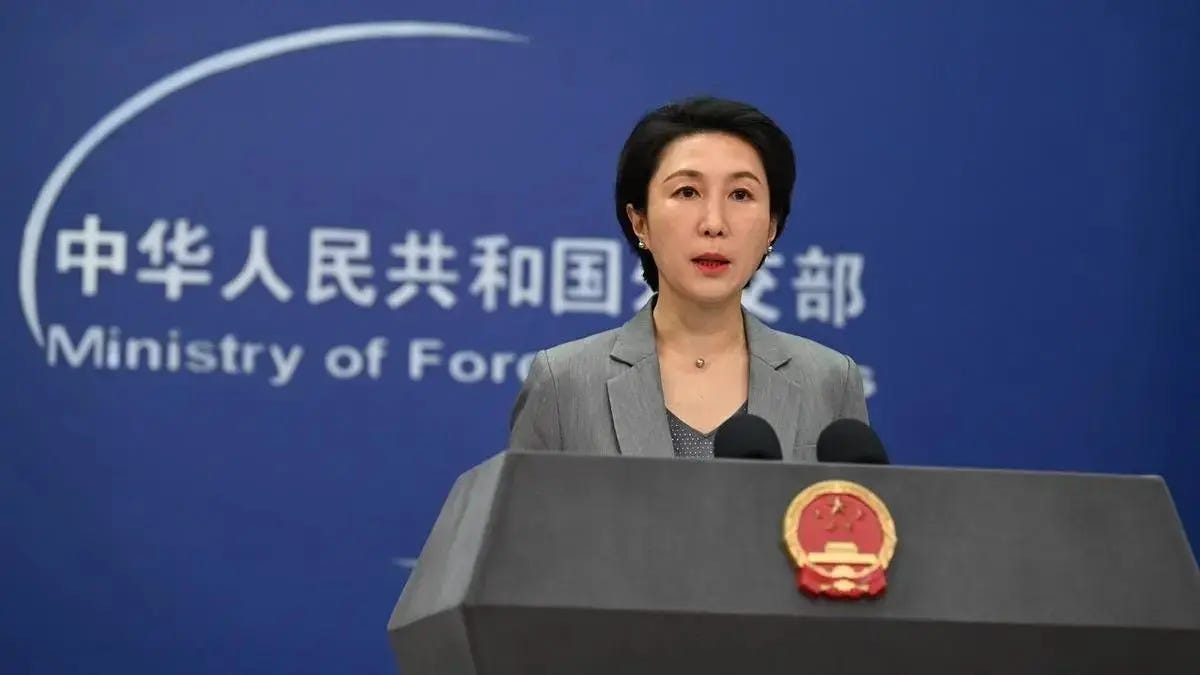
“China attaches importance to its relations with Venezuela and maintains sound communication and cooperation with the Venezuelan government,” Chinese MFA spokesperson Mao Ning affirmed on January 9. “China will continue to firmly support Venezuela in upholding its sovereignty, dignity, national security, and lawful rights and interests.”
“No matter what political changes may take place in Venezuela, it will not change China’s will of deepening practical cooperation in various fields with Venezuela and promoting common development,” she added.
Former Russian president and the Russian Security Council’s current Deputy Chairman Dmitri Medvedev remarked that the year’s “opening will be remembered for the abduction of Maduro … an utterly vile act of thuggery—or, to put it more elegantly, a full-blown catastrophe for international relations.”
He suggested two possible scenarios: “Either the United States quietly releases the kidnapped Venezuelan president under some face-saving pretext—which is unlikely—or he turns into the Latin American version of Nelson Mandela. The latter seems more probable.”
“In that case, his name will be etched into South American history right alongside Bolivar, Miranda, and Chavez,” he suggested. “And even if Trump, out of sheer stubbornness, refuses to pardon Maduro later, public pressure will almost certainly force Vance or another successor to do so.”
Emphasizing that the true reasoning for the attacks is long-term control over Venezuelan oil, Medvedev asked whether Trump is “really prepared to launch a ground operation.”
“That would absolutely require approval from Congress, and it would be far bloodier than the brazen kidnapping of Maduro,” he notes. “Moreover, the Senate has just tightened the leash on Trump, curbing his militarist impulses. And does the current administration even need such a war? Highly doubtful.”
US seizes Russian oil tanker in international waters, drawing further ire from Russia
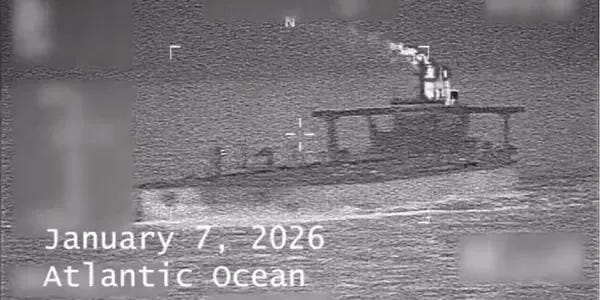
In a further act of privacy and breach of international law, the US also seized one or more Russian oil tankers in international waters near Venezuela.
“We need to provide a military response: attack with torpedoes or sink a couple of American boats,” suggested Aleksey Zhuravlyov, who serves as first deputy head of the State Duma defense committee. “This is nothing more than piracy: the seizure of a civilian vessel by the armed US Navy. It is essentially the same as an attack on Russian territory, since the tanker was flying our national flag.”
He suggested a “firm” and “swift” response, perhaps even a nuclear one. “There is no doubt that we must respond firmly and swiftly—our military doctrine even envisages the use of nuclear weapons in response to such an attack. Especially since, according to available information, a Russian submarine and some other Russian military ships were located somewhere near the vessel.”
On the messaging platform Telegram, Medvedev noted, “What happened was a clear violation of the 1982 United Nations Convention on the Law of the Sea (UNCLOS). But it bears recalling that the United States never ratified that convention.” Medvedev added that the US does not bother to comply with international law regardless.
Russian news agency TASS reported that two Russian crew members of the Marinyera were safely released by the US following a Russian request.
MOFCOM on Chinese-Venezuelan trade relations
On January 8, China’s Ministry of Commerce (MOFCOM) spokesperson He Yadong questioned and condemned the US’ attempts to restrict Venezuela’s economic relations in the international sphere.
“Economic and trade cooperation between China and Venezuela is conducted between sovereign states and is protected by international law and the laws of both countries,” asserts He. “No other country has the right to interfere.”
Previously, MFA spokesperson Mao Ning noted on January 6, “China believes that all countries should respect the development paths chosen by the people of other countries and abide by international law and the purposes and principles of the UN Charter. Major countries, in particular, should set a good example. No country should act as the world’s police or judge.”
“China champions the vision of common, comprehensive, cooperative, and sustainable security; respects all countries’ sovereignty and territorial integrity; takes other countries’ legitimate security concerns seriously; and supports resolving differences and disputes peacefully through dialogue and consultation,” Mao added. “This is China’s solution for global security challenges and towards universal and common security. China stands ready to work with other countries to defend the authority of international law, reject the law of the jungle, oppose interference in countries’ internal affairs, and jointly uphold world peace and stability.”
She did not directly respond to a reporter’s question regarding whether China would “call for sanctions” against the US. Historically, China has strongly opposed unilateral sanctions and great-power chauvinism, especially given the US’ use of sanctions as economic weapons, such as in Cuba.