
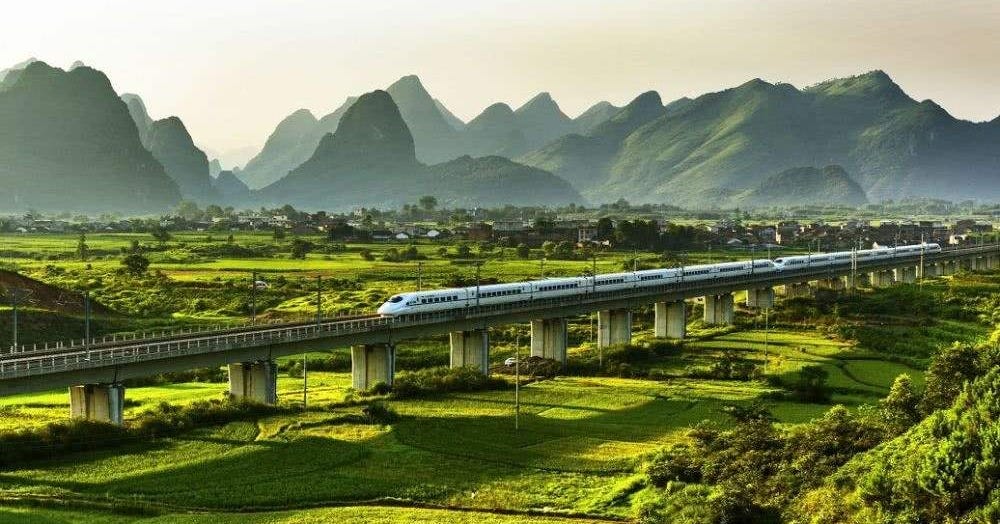
This guest article was written by Douglas de Castro of The New Silk Road Law Lab, who holds a PhD in Political Science from the University of São Paulo and an LLM in International Law from Brigham Young University’s J. Reuben Clark Law School. He is currently a Professor of International Law at Lanzhou University’s School of Law.
Setting the scene
“We don’t need to save the planet,” a provocative utterance by Mattia Acerbo of The Ecosocialist, encompasses an inconvenient truth: nature and the planet will survive despite humans, as they have for millions of years.
We are pursuing saving humans; thus, addressing the underlying cause for the existential threat posed by climate change and biodiversity loss is essential.
The modern global environmental crisis cannot be understood as a purely technical or scientific problem. It is above all a political-economic problem that arises from the historical expansion of capitalist production and the imperial structures that sustain it.
The dominant environmental narrative coming out of the Global North is an ideological hegemony that masks the real logic of capital accumulation and ecological dispossession.
To this end, hegemonic dominance is visible not just in the promotion of market-based “solutions” or techno fixes but also in the paradigms of knowledge and finance that shape how the rest of the world must respond to the climate emergency.
This trend is visible in the climate change international regime, in which the mitigation dimension, which impacts negatively on accumulation, is being slowly replaced by adaptation, which requires technology and financing, both available and supplied by the market.
This has led to the use of the term “green colonialism” as a key analytical concept to understand this phenomenon and how supposedly progressive climate policies can be a new vehicle for extraction, land grabs, and profit, all under the guise of sustainability.
This process involves the imposition of Northern knowledge systems and financial mechanisms that often sustain neocolonial dependencies, enabling forms of exploitation that benefit Global North capital.
A key part of this hegemonic structure is the creation of “climate debt,” where the Global South, responsible for the least historical emissions, is nonetheless forced to pay the costs of adaptation and mitigation, often through punitive financial arrangements.
Carbon markets and offset projects are what some scholars call “carbon colonialism,” a practice that enables polluters in the Global North to offset their own emissions by funding projects in the Global South.
In effect, this constitutes a system in which the natural space of developing countries is being commodified for the benefit of developed economies, rather than addressing the underlying causes of overproduction and overconsumption within these same economies.
Such mechanisms have been criticized as an extension of the colonial logic of extractivism that prioritizes extraction of resources for export to wealthier nations, creating and exacerbating global inequities.
This dynamic is further sustained by epistemic violence, through which the gatekeeping of access to climate finance creates barriers for Southern countries and reinforces the authority of Northern institutions and experts to reproduce colonial power relations.
The result is a system where climate aid can be used as a form of colonial debt enforcement to coerce indebted countries to implement creditor-selected policies under threat of default.
The institutional architecture of global finance is part of what sustains this unequal ordering. International financial institutions such as the International Monetary Fund (IMF) and the World Bank, which have their origins in the financial control of the colonial era, continue to exert considerable influence on the economic policies of countries in the Global South.
In the past, their structural adjustment programs have required countries to put debt repayment and market liberalization before public health care, social services, and environmental protection, paving the way for ecological degradation.
This logic remains nowadays as developing countries pay, on average, twice as much in interest on their sovereign debt as developed nations, a structural disadvantage that severely constrains their capacity to invest in climate resilience and sustainable development.
These institutions attach strict conditionality to their loans, hoping to use development financing as a tool to enforce policy changes in borrowing countries, often undermining national sovereignty, entrenching the colonial origins of Global South debt, and keeping the region locked into a dependent relationship with Northern capital (i.e., the IMF‘s conditionality now becomes “green” conditionality).
In other words, paraphrasing Eduardo Galeano, the veins of Latin America remain open. Liberal and social-democratic policies do not provide a framework for understanding imperialism and its ecological history.
The gap is increasingly being taken up by critiques of this whole paradigm, including its so-called “green growth” or “green capitalism” scenarios, which depend on fundamentally imperialist assumptions to meet their goals.
Therefore, the challenge of the Green Belt and Road Initiative (Green BRI) may be seen as a direct answer to this suffocating hegemony and an alternative development paradigm that seeks to break these established patterns of dependency and ecological exploitation.
Ecological civilization: China’s ideological campaign in global governance
In a mix of non-fiction and fiction, Naomi Oreskes and Erik M. Conway, in the book The Collapse of Western Civilization: A View from the Future, provide an exercise on the underlying causes for the ecological crisis (facts) and an account of how world leaders respond to it (fictional). At the end, the world collapses due to extreme natural events, except for one country: China.
In contrast to the imagined failures and hegemonic tendencies of Western environmentalism, the People’s Republic of China (PRC) has put forward its own all-encompassing ideological framework: Ecological Civilization (EC).
This idea and constitutional mandate, articulated as the vision of the Communist Party of China (CPC), forms the foundational philosophy underpinning China’s domestic environmental policy and, increasingly, its international engagement through the Belt and Road Initiative (BRI).
EC is a holistic societal transformation that integrates ecological considerations into all aspects of development, politics, and culture. It is red-green thinking, combining environmental and social liberation to pursue green development with a humanistic focus.
This framework is characterized as a top-down, state-led developmental variant of environmentalism that is intentionally conceived as a device of pressurizing global environmental norms largely produced by the West.
The EC philosophy and legal mandate serve a two-fold strategic purpose.
First, it offers a potent domestic storyline for tackling China’s severe pollution and ecological challenges, positioning the country’s ambitious green transition as a moral and civilizational obligation.
Secondly and more importantly in terms of countering the Western narratives, it portrays China as a responsible global leader capable of offering an alternative path to development for the Global South.
Operationalizing the EC in the international system
China is positioning the BRI as a green initiative to change perceptions of its massive infrastructure investments, which have been criticized for lacking environmental standards. However, because the infrastructure projects were gigantic when the BRI started in 2013, the learning curve for both China and recipient countries was steep, thus justifying the criticism.
The Green BRI emerged, bringing new approaches to the projects, such as the “small is beautiful” approach (some attach the origin to E.F. Schumacher’s book Small is Beautiful: Economics as if People Mattered) and the “high-quality development” policy mandate.
Therefore, the recontextualization of the BRI becomes an intentional ideological intervention into global environmental governance by challenging the idea that there is one right way to conduct development and arguing that a model of strong state planning, rapid industrialization, and ecological considerations is a possible and even better alternative to the neoliberal, market-oriented models promoted by Western powers.
To this end, the CPC’s view of EC is clearly framed in terms of responding to global challenges such as climate change while preserving national stability and promoting its long-term strategic interests. The ideological export of EC is operationalized through a series of high-level policy documents and international platforms.
Since 2015, the Chinese government has issued a series of directives, such as the Guidance on Promoting Green Belt and Road and the Guidelines on Jointly Promoting Green Development of the Belt and Road, to institutionalize the integration of EC principles into BRI projects (not to mention the new Environmental Code).
These documents set out a clear mandate to cut carbon emissions, fight pollution, protect biodiversity, and improve economic prospects for partner countries, all under the broad banner of building a global community of ecological civilization.
Furthermore, the institutionalization of such efforts through the creation of dedicated international bodies such as the Belt and Road Initiative International Green Development Coalition (BRIGC) further underscores the parallel forum for the development of green standards and best practices.
By actively participating and influencing global forums, such as signing a memorandum of understanding with the United Nations Environment Programme (UNEP) to build a Green BRI, China shows its ambition to not only participate but also lead the next phase of global environmental governance, moving the centre of gravity of the world economy from the Global North and showing that China becomes an important agent in developing paradigms for the majority of mankind that go beyond the materialistic dimension to incorporate ideational stances embedded in the Bandung spirit of solidarity.
The Green BRI toolkit: A systemic challenge via South-South cooperation
The Green BRI is a complex and evolving system of concrete policies, financial instruments, and cooperative platforms to operationalize the Chinese civilizational approach. The toolkit offers tangible alternatives to the Western-centric financial and institutional architecture and therefore constitutes a systemic challenge to the current global order. The Green BRI is fundamentally anchored on the principle of South-South cooperation as its main organizing principle and alternative to the existing North-South dependency models.
The approach emphasizes mutual learning, joint development, and collective action among Global South countries, arguing that the fastest path to sustainable development is for Southern countries to engage and interact with each other.
This approach coincides with wider anti-imperialist objectives to extricate from dominant economic frameworks and to cultivate transnational solidarity to escape the clutches of imperialism, which assumes new and subtle forms nowadays, such as the sustainable development principle that becomes a commodity to be sold to the “savages.”
Beyond policy, the Green BRI has built an advanced financial and investment architecture designed to direct capital to sustainable projects.
The Asian Infrastructure Investment Bank (AIIB) is the core of this architecture, created as an alternative source of infrastructure financing for developing countries. The AIIB was established with a bold agenda to be a “lean, clean, and green” multilateral development bank for the 21st century.
Since then, it has helped drive green finance initiatives in the wider environmental, social, and governance (ESG) ecosystem, without imposing conditionalities on recipient countries, which preserves their agency in establishing the priority of projects of interest to the country.
Similarly, China’s EXIM Bank has formulated Green Financing Frameworks (GFF) to help it select green credit projects that satisfy certain environmental criteria.
The Green Investment Principles for the Belt and Road (GIP-BRI) were launched to engage the private sector as a set of voluntary guidelines for investment enterprises to adopt green and sustainable practices.
This multi-pronged financial strategy—integrating state-directed policy, multilateral development banking, and private-sector incentives—is designed to make green investment one of the most effective means to promote low-carbon development along the BRI routes.
Additionally, the Green BRI works through a network of technical and cooperative platforms for capacity building and knowledge sharing. China, conscious of technology and expertise being key for green transitions, committed to offering 100,000 training opportunities for partner countries in various ways.
These efforts aim to bolster the environmental resilience of partner countries through bilateral cooperation and foster the adoption of low-carbon pathways, which creates platforms for dialogue, information support, and communication to help recipient countries build the necessary conditions for green development. This permits transnational knowledge and policy transfer, building on the tradition of solidarity in the Global South.
Moreover, there are also specialized partnerships such as the Belt and Road South-South Cooperation Initiative on Climate Change, which aims to help vulnerable countries adapt to the impacts of climate change and promote low-carbon development.
Altogether, these instruments, the policy framework, the financial architecture, and the cooperative platforms constitute a holistic system to mainstream green development into the BRI’s DNA, thereby contesting the dominant global regime and offering a new model of economic and environmental cooperation between states.
Degrowth communism: Applying Kohei Saito’s critique to the Green BRI
To critically evaluate the Green BRI, we need a theoretical lens that goes beyond traditional liberal environmentalism and provides a deep critique of the capitalist system itself. Such a framework can be found in the work of Japanese Marxist economist Kohei Saito.
Saito has earned international fame for his reading of Karl Marx as a degrowth communist, claiming that Marx’s later writings moved from a Promethean belief in endless productivity to a vision of healing the metabolic rift between humanity and nature, which capitalism generates by globally externalizing its toxic by-products.
For Saito, this metabolic rift is the engine of global inequality and ecological destruction, systematically passing ecological costs onto the Global South in a process deeply intertwined with the logic of imperialism.
This view, grounded in Lenin’s theory of imperialism as the highest stage of capitalism, provides a powerful lens for understanding the historical and continued patterns of unequal ecological exchange between the Global North and South.
Saito’s conception of degrowth communism offers some important lessons for the Green BRI. First, degrowth does not equal economic stagnation; it means reducing consumption and production in the Global North to achieve sustainability and social equality.
Crucially, Saito argues that this must be accompanied by a form of relative degrowth in the Global South, one that enhances people’s capabilities and promotes sustainable development without driving them onto the same hyper-consumption path that caused the ecological crisis in the first place.
From this perspective, the Green BRI can be read as an imperfect attempt to accommodate this relative degrowth. This initiative could help countries in the Global South to avoid the unsustainable development models of the West by providing green infrastructure, renewable energy technologies, and climate finance, thus boosting their ability to live sustainably without necessarily having the same levels of per capita consumption. Projects in renewable energy, environmental governance, and marine conservation could be seen to contribute to a common ecological basis for all.
Also, Saito’s focus on communism as the act of reclaiming the commons walled off by capitalism provides another critical perspective. The argument is that capitalism privatizes profits and socializes and externalizes costs. Commons, the collective resources and spaces needed for life, are enclosed and commodified.
The Green BRI’s emphasis on the construction of common ecological infrastructure, including regional power grids for renewable energy, joint platforms for climate resilience, transfer of green technology, and marine conservation zones, can be read as an attempt to produce and govern common, non-privatized ecological goods.
These projects are geared toward the production of communal goods and services and are thus at odds with the logic of “green capitalism,” which subsumes even “green” solutions and techno fixes to the logic of profit.
Finally, Saito criticizes certain forms of degrowth for being too anti-state and too localist, arguing instead for the need for democratic planning to change existing institutions and create real growth independencies.
As such, the highly centralized, state-led character of China’s EC and Green BRI, while considered by some as “authoritarian environmentalism,” may be interpreted as a pragmatic acknowledgment of the scale of institutional transformation needed to address planetary crises.
There is debate about the ultimate goals of this state-centric approach, but it does offer the possibility of large-scale coordination to effect systemic change.
The contradictions and limits of the Green BRI
Claiming to offer a progressive alternative to Western hegemony, it is, however, firmly embedded in the framework of socialism with Chinese characteristics, which may have its own set of exploitative tendencies.
The BRI is generally perceived as a loose governance framework of activities undertaken by the Chinese state in coping with a crisis in Chinese market socialism. It is designed to solve problems of surplus capital accumulation and boost economic growth through overseas investment.
Claiming to offer a progressive alternative to Western hegemony, it is, however, firmly embedded in the framework of socialism with Chinese characteristics, which has its own potential limitations and tendencies.
The BRI is generally perceived by outsiders as a loose governance framework of activities undertaken by the Chinese state to solve problems of surplus capital accumulation and boost economic growth through overseas investment.
In light of this criticism, the “greening” of the BRI may also be understood as a strategic move to manage the environmental backlash against China’s infrastructure projects and open up new markets for its burgeoning green industries, such as renewable energy and electric vehicles, opening up the possibility of green mercantilism where the initiative exports surplus green capacity not out of pure altruism but to secure foreign markets and to make profits for Chinese state and private enterprises.
In addition, the project has been linked to large environmental risks and negative impacts, such as the ongoing construction of coal-fired power plants in some partner countries. A few analyses have pointed out that the overall impact of the BRI projects could cause a temperature rise of up to 3 degrees Celsius, leading to adverse effects on ecosystems and biodiversity.
Given the scale of the BRI, which affects around 60% of the world’s population, even well-intentioned projects can have negative, unintended consequences if not properly handled, underscoring the tension between the state-led, top-down implementation of EC and the real-world realities of local communities, who may feel voiceless in the planning and execution of these large projects.
The most important restriction from the perspective of Global South solidarity may be the ongoing possibility of developing new forms of debt dependency.
The Green BRI is an alternative to the conditionality of the IMF and World Bank, but its projects still entail large loans and investments that contribute to the growing sovereign debt burdens of recipient countries.
By paying this debt directly, these countries have less money to spend on basic services or respond to climate disasters, which could keep them in a cycle of being indebted to Chinese lenders.
This begs the important question of whether the Green BRI really empowers countries to break away from imperialist structures or merely replaces one set of dependencies for another.
The initiative’s alignment with Sustainable Development Goals (SDGs) is often presented to secure inclusive and sustainable development, but the reality on the ground could be the imposition of a different set of priorities and constraints associated with green finance and technology standards.
Ultimately, while the Green BRI opens a door for the Global South to pursue alternative development pathways and challenge the suffocating grip of Western-dominated regimes, it is not a fully fledged socialist or ecosocialist project.
Its logic of market socialism, capacity to generate new ecological and financial dependencies, and absence of popular control are key points of struggle and resistance for any true emancipatory movement.
The new geopolitics of ecological struggle
The Green BRI is a major and complex phenomenon in the current geopolitical landscape and a major, albeit contradictory, challenge to the dominance of Western environmental narratives. The rise of China is indeed the first sign of a change in the international balance of power, the point where the center of economic gravity has moved from the North to the South, with China as a major player in this new world.
The Green BRI is a chance for Marxist-Leninists, Global South solidarity activists, and critics of liberal environmentalism to shift the dominant discourse and imagine alternative paradigms for ecological and economic development.
Through promoting its own ideological concept of EC, China has made a successful intervention in global environmental governance by offering a state-led developmental model that challenges the neoliberal orthodoxy promoted by Western institutions.
The Green BRI provides concrete alternatives to the conditional and often extractive frameworks of the IMF and World Bank through a toolkit of policy guidelines, green financial institutions, and platforms for South-South cooperation.
From the perspective of Kohei Saito’s degrowth communism, it can be viewed as an imperfect attempt to create a relative degrowth for the Global South, providing the technological and financial means for sustainable development without repeating the ecologically destructive path of the Global North.
The emergence of shared ecological infrastructure and collaborative platforms for climate resilience can be understood as an embryonic attempt to reclaim the commons from pure capitalist enclosure.
Objectively, the Green BRI has created a key space for the Global South to assert its sovereignty over nature, negotiate from a position of strength, and demand climate reparations and a just transition.
That said, a principled analysis cannot discount the deep contradictions of the initiative as pointed out previously. Therefore, the task for the Global South is not to uncritically accept the Green BRI but to strategically engage with it by leveraging its promise to challenge the dominance of Western financial and environmental regimes while also holding it accountable for its contradictions and limitations.
Furthermore, the partner countries of the BRI should not omit their own responsibility in strengthening their institutions to make this engagement a true win-win cooperation platform.
If we are to build solidarity across the Global South and seize every opportunity to struggle towards a world that is truly green and just, a world in which ecological sustainability and human liberation are achieved through democratic, internationalist, and anti-imperialist struggle, then we must traverse this difficult ground.
The views of this article do not necessarily reflect those of Voice of the Proletariat.

For a century, American grand strategy had a singular goal to prevent a single power or coalition of hostile powers from unifying the Eurasian landmass. The United States fought two world wars based on this strategy.
Then came the end of the Cold War and within 30 years we had literally shipped all of our manufacturing base and much of our wealth to a country that decided to literally rebuild the inner Asian trade routes and shorten its internal supply lines, thus negating 500 years of European sea going colonial domination.
Great article. Thank you very much.
It’s a matter of agricultural diversification (as well as energy and manufacturing) which needs to happen 40 to 50 years ago, to be practicable today.
The Green Colonialism is the tyranny of the 1950’s Green Revolution which converted the entire global system to an addiction to petrochemical industry. And, that’s China, the US and every developed nations and almost all the “client states.”
So, why the Strait of Hormuz is a major leverage point for Iran in dealing with US and Israeli belligerency. Why Sri Lanka had a major economic catastrophe when trying to transition to an organic agricultural system not suited for the region and the nation, and why farmers revolted in France. Because, we are not diversified already in food production in appropriate ways for specific global regions.