
As Communists, it is crucial to learn from history. This task is not performed merely by selectively curating the “good” parts of history whilst ignoring the rest, but by carefully studying and learning from both historical successes and historical failures.
A notable example of this comprehensive historical engagement is China, which has learned from its over 5,000 years of history of civilization to inform its contemporary praxis.
Ultra-left deviations and the Cultural Revolution
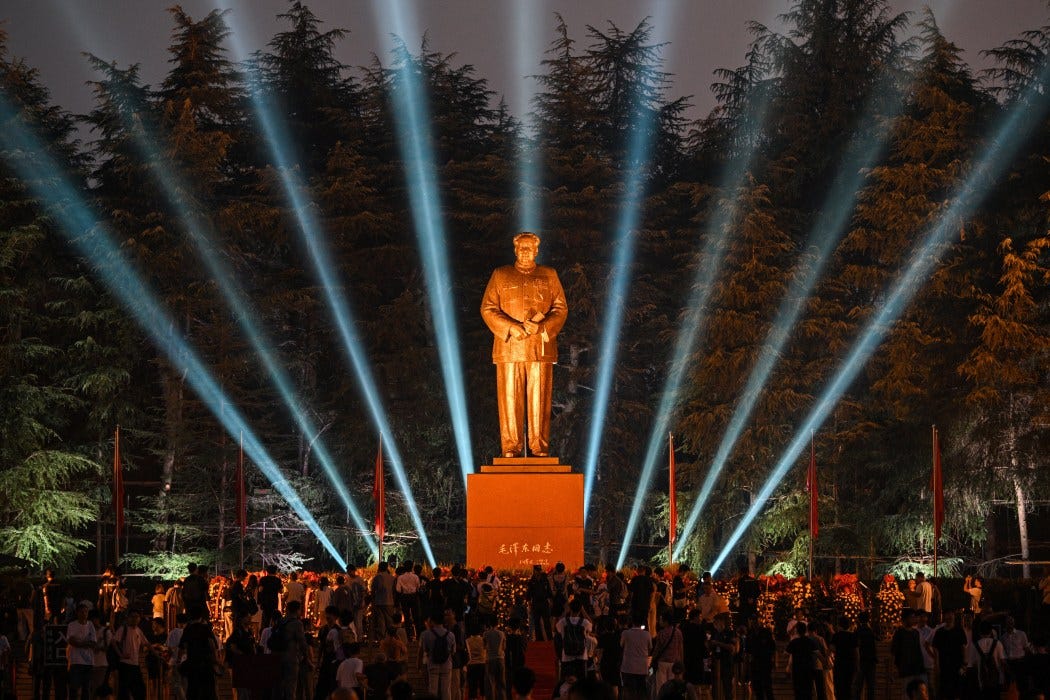
Upon seeing Khrushchev’s revisionism, which ultimately led to the downfall of the USSR under Gorbachev, Chairman Mao and the Communist Party of China (CPC) initiated certain measures to ensure such events would not unfold in China.
However, the Party took an ultra-left path during these later years of Mao’s life, engaging in certain acts that were ultimately harmful to the Communist movement, from siding with the Shah of Iran to the Cultural Revolution, a period marked by the rejection of Mao’s own earlier works in favour of dogmatism and anti-intellectualism.
Nevertheless, Chairman Mao’s fundamental mission to combat revisionism achieved ultimate success through China’s Reform and Opening Up, which established a new path of socialism with Chinese characteristics tailored to the nation’s unique material conditions.
Socialism with Chinese characteristics: an uncharted yet familiar path
While China’s socialist path today may appear uncharted, it nonetheless offers a profound sense of familiarity by integrating diverse leadership styles from our great and long history, today creating a form of governance that is both widely supported by and actively supportive of the people.
Culturally aware governance to support the people
The CPC and the Chinese government have incorporated elements of traditional and modern culture into their administration to more accurately represent the diverse histories of the masses, an approach most clearly demonstrated in the culturally aware governance of its 56 ethnic groups, from the Uyghurs in the Xinjiang Uygur Autonomous Region (XUAR) to the Tibetans in the Xizang Autonomous Region (XAR).
As the Central Committee of the CPC (CCCPC)’s 1982 document, The Basic Viewpoint and Policy on the Religious Question During Our Country’s Socialist Period, states:
[The Party committees at all levels] should undertake conscientious investigation of the work in those regions and departments for which they are responsible, systematically summing up their historical experience, positive and negative, shaping this into a set of viewpoints and methods in which theory and practice are intimately combined and which are suitable to conditions in their regions and departments.
While there will always be those who wish to destroy China’s great harmony, such as the East Turkistan Islamic Movement (ETIM) Uyghur ethnonationalist separatists, recognized as a terrorist movement by the UNGA, that aims to forcefully establish a so-called “East Turkistan” independent state spanning parts of Turkey, Kazakhstan, Kyrgyzstan, Uzbekistan, Pakistan, Afghanistan, and XUAR; and the Dalai Lama and his Tibetan exile gang, who seek to reinstall a brutal serfdom, China’s government will always stand firm against such despicable acts.
Learning from our Century of Humiliation
Similarly, we have learned from our Century of Humiliation, during which Western and Japanese imperialist powers subjected the Chinese nation to shameful aggression and exploitation, such as through unequal treaties.
Today, we refuse to tolerate the bullying of any sovereign state—whether China or another—by imperialist powers such as the USA. Rather, we advocate for universal sovereignty for all nations and unceasingly call for people-to-people dialogue and win-win cooperation. As Chairman Xi declared in 2021 at a ceremony marking the centenary of the CPC,
We have never bullied, oppressed, or subjugated the people of any other country, and we never will.
Drawing from ancient traditions of ritual diplomacy, harmonious state relations, and avoidance of unnecessary war, China continues to hold the belief that cooperation brings prosperity to all relevant parties, yet China remains prepared to defend itself against foreign aggression. As Professor Victor Gao once said, “China will not fire the first shot, but China will not allow you to fire the second shot.”
Arise! Answer the call of the times!
Just as the CPC first rose to answer the call of the times by responding to national crisis and foreign domination, all Chinese people today, whether from the mainland, Hong Kong, Macao, Taiwan, or in the diaspora, must follow in their footsteps and jointly forge a strong sense of community and great unity.
Similarly, Communists worldwide should learn from the good example of the CPC and answer their own call with informed and resilient praxis, learning not only from the destinations reached by great proletarian revolutionaries such as Comrades Lenin, Stalin, and Mao, but also from the complex twists and turns encountered along their paths.